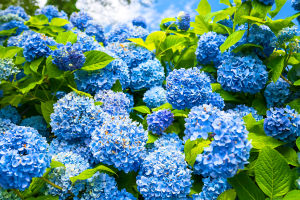
Hydrangeas are popular for their large flower clusters and beautiful colors. Pink, white, green, and purple varieties can brighten any garden, but blue hydrangeas have a particularly refreshing appearance. Their cool tones make them an attractive choice for balconies, patios, and garden beds.
However, growing blue hydrangeas takes more than adding a special product to the soil. Flower color is closely connected to soil acidity, aluminum availability, and proper timing. If your hydrangeas keep producing pink flowers, a few adjustments to your growing routine may help.
Understand Why Hydrangeas Turn Blue
The color of bigleaf and mountain hydrangeas (Hydrangea macrophylla and Hydrangea serrata) depends directly on soil chemistry—though pure white varieties never turn blue regardless of treatment. Specifically, soil acidity controls whether the roots can unlock aluminum from the earth. When soil reaches a pH between 5.2 and 5.5, aluminum dissolves easily and travels up into the petals, producing vibrant blue blooms. In neutral or alkaline soil (pH 6.0 and above), aluminum stays locked away, resulting in pink flowers instead.
This explains why the same type of hydrangea can produce different colors in different gardens. For gardeners hoping to achieve blue blooms, the goal is to maintain acidic soil while ensuring that available aluminum is present.
Start Adjusting the Soil Early
Timing is one of the most important parts of changing hydrangea flower color. Waiting until the flower buds are almost open is generally too late to achieve the desired result.
A better approach is to begin in spring, when new shoots start appearing. At this stage, the plant is entering an active growth period, giving gardeners time to establish suitable soil conditions before the flowers develop.
If you notice new buds, begin adjusting the growing conditions as early as possible. Consistent preparation is more effective than making several last-minute changes.
Choose an Acid-Friendly Soil Mix
Healthy roots need a well-draining, naturally acidic foundation. In garden beds, work aged pine bark fines, leaf mold, or composted pine needles into the topsoil to gently lower pH and improve drainage. For potted hydrangeas, skip heavy yard dirt—which compacts easily and often holds lime—and fill containers with a peat-free ericaceous potting mix formulated for acid-loving shrubs.
Use Aluminum Products Carefully
Two commonly used options for encouraging blue hydrangea flowers are aluminum sulfate and commercial hydrangea color-changing products.
Aluminum sulfate supplies aluminum, but its effectiveness depends on the soil being sufficiently acidic. In acidic soil, aluminum sulfate dissolves into a form the roots can readily absorb. Pre-blended commercial hydrangea bluing mixes are also widely available and combine sulfur with aluminum in measured ratios.
Follow their instructions carefully and avoid applying excessive amounts in an attempt to speed up the process.
Some gardeners also discuss using diluted vinegar or citric acid to adjust soil acidity. However, these substances should not be added casually. Check the soil conditions and product guidance before making adjustments.
Pay Attention to Water Quality
Watering habits can also influence the conditions around hydrangea roots. Municipal tap water in hard-water areas often carries dissolved calcium and minerals that slowly neutralize soil acidity over the summer. Collecting rainwater in a barrel gives your hydrangeas naturally soft, slightly acidic moisture—especially helpful for container plants that dry out quickly. Remember that soil acidity and aluminum availability work together, so both deserve attention.
Maintain Consistent Growing Conditions
A common misunderstanding is that hydrangeas need soil adjustments only once. Soil chemistry shifts gradually with watering and seasonal growth, so test your pH every few weeks and watch the petals for early clues—purple, mauve, or two-tone blooms signal that soil acidity is creeping upward. Just as importantly, avoid high-phosphorus fertilizers (look for a low middle number on the bag), because excess phosphorus binds to aluminum in the soil and blocks your plant from turning blue.
Final Thoughts
Transforming pink hydrangeas into cool, sky-blue showstoppers is a gradual process rather than an overnight trick. Even if your first season produces charming shades of lavender or violet while the soil adjusts, every steady step brings your shrubs closer to true blue. Stay patient with your soil routine, enjoy the shifting palette along the way, and your garden will reward you with vibrant blooms season after season.
Step by step: How to turn Hydrangea Flowers Blue
Video by Planting 101