Hello there, readers. You'd think the most interesting thing in a photo grabs your attention first.
But it doesn't work that way. Composition quietly overrules everything, deciding where your eye lands before your brain even registers what it's looking at.
The same subject, shot from a slightly different angle or placed in a different spot, can tell a completely different story.
The frame is the real boss
Think of the viewfinder as a set of rules. Whatever sits dead center feels stable, calm, and important. Push that same object to the left edge, and suddenly the photo feels tense, like something's about to happen. You've felt this with portraits. A face centered in the frame feels formal, like a mugshot. Shift the face to the right third, leaving empty space on the left, and you instantly wonder what the person is looking at. That's the rule of thirds working on you. Your eye goes to the face because it's the most detailed element, but the empty space sets the mood. The placement, not the person, creates the meaning.
Lines drag you where they want
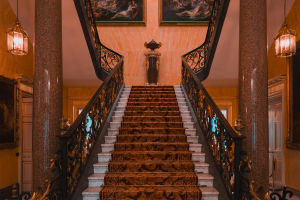
Strong lines act like arrows, even when they don't look like arrows. A road curving toward a mountain pulls your gaze straight down the asphalt and into the distance. A fence running diagonally from the bottom corner to the top pushes your eye up and across the frame. The classic example is a railway track shot from between the rails, converging at a vanishing point. You can't help but follow it. Then there are implied lines, like a person's gaze. If a subject looks off to the left side of the frame, you'll instinctively look left too, searching for what they see, even if nothing is there. The line doesn't exist physically, but it controls your attention just as firmly as a painted arrow.
Contrast and detail set the pecking order
Your eye always seeks out the part of the frame with the most contrast and the most detail. A bright white building against a dark stormy sky will win your attention every time, regardless of its size. Same with a sharp, in-focus face surrounded by a soft, blurred background. That's why shooting with a wide aperture like f/1.8 works so well for portraits. The shallow depth of field isolates the subject, and the blur tells your brain there's nothing worth looking at back there. In a busy street scene, the one person wearing a red jacket among hundreds in gray will pop instantly. It's not because red is special, it's because it breaks the pattern. Your eye locks onto the exception, not the norm.
Cropping changes the whole story
Here's a trick you can test in five minutes. Take any photo you already have and crop it three different ways. A tight crop on a person's face makes the photo about emotion and expression. Pull back to include their hands and the table in front of them, and now it's about context and situation. Crop even wider to show the room around them, and the photo becomes about environment. The subject never changed, but the visual focus shifted completely. This is why you should always ask yourself what you're leaving out before you press the shutter. What you exclude matters just as much as what you include. A cluttered frame with ten interesting things has no visual focus at all, because your eye keeps jumping around and never settles.
So next time you frame a shot, pause for a second. Ask yourself what your eye lands on first, and whether that's actually what you want it to land on. If not, move your feet, change your angle, or just wait for the background to clear. The composition is doing the work whether you think about it or not. Might as well make it work for you.