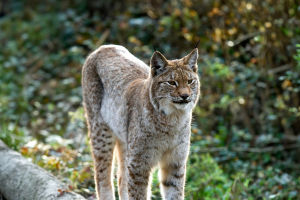
High above the clouds, where the air is thin and the jagged rocks are permanently dusted with frost, lives a predator so stealthy that many locals call it a spirit. The Snow Leopard is a creature of pure mystery, perfectly evolved to survive in a vertical world of ice and stone.
While other big cats rely on the dense cover of jungles or the vastness of the savannah, this feline operates in a landscape that would be lethal to almost any other mammal.
Every inch of its body is a specialized tool, from its smoke-colored fur to its massive, powerful limbs, allowing it to vanish into the mountainside as if it were made of the very mist itself.
Engineering for the Extreme Cold
Survival at altitudes reaching 18,000 feet requires more than just thick skin; it requires a complete biological redesign. The Snow Leopard possesses one of the densest fur coats in the animal kingdom, with nearly 4,000 hairs per square centimeter. This ultra-plush layering provides a thermal barrier against sub-zero temperatures, while the pale grey and cream patterns act as perfect camouflage against limestone ridges and granite cliffs.
Even their breathing is specialized. These cats have unusually large nasal cavities that warm the freezing mountain air before it reaches their lungs. This prevents internal chilling and allows them to maintain high energy levels even during a steep, high-speed chase through the snow.
The Ultimate Mountain Anatomy
The physical structure of a Snow Leopard is built for a life spent jumping across canyons and scaling vertical walls. They are the champion long-jumpers of the feline world, capable of leaping up to 50 feet in a single bound—roughly six times their own body length.
Specialized Physical Features:
1. Extra-Long Tail: Their tail is nearly as long as their body, acting as a critical balancing pole during precarious mountain descents. At night, they wrap it around their nose and mouth like a built-in scarf for warmth.
2. Natural Snowshoes: Their paws are massive and wide, covered in thick fur that protects them from the bite of the ice and provides a wide surface area to prevent them from sinking into deep drifts.
3. Short Forelimbs and Long Hindlegs: This specific limb ratio gives them incredible leverage for explosive upward movement and helps them maintain a low center of gravity on narrow ledges.
4. Powerful Chest Muscles: These allow for deep breaths and high-stamina climbs in oxygen-thin environments.
A Life of Solitary Stealth
Unlike lions that live in social groups, the Snow Leopard is a committed loner. Each cat patrols a vast territory that can cover hundreds of square kilometers. Because the terrain is so rugged and prey is scarce, they must be incredibly efficient hunters. They are masters of the "high ground," often spotting their target from hundreds of meters above and silently descending using the natural folds of the rock for cover.
Their primary prey includes wild sheep and mountain goats, animals that are themselves experts at navigating steep slopes. This leads to high-stakes chases where the leopard must demonstrate acrobatic agility, twisting and turning mid-air to stay on the trail of its meal. Interestingly, despite their power, these cats are famously non-aggressive toward humans and are the only big cats that cannot roar; instead, they communicate through hisses, growls, and a unique "chuffing" sound.
The Challenge of the High Wilderness
Living in such a remote environment offers protection from many threats, but it also presents significant challenges. Because they are so rare and spread out, finding a mate is a difficult task that involves leaving scent marks on prominent boulders to signal their presence. These "scent posts" are the communication hubs of the mountain, telling other leopards about the age, gender, and health of the cat that passed by.
As the apex predator of the high ridges, the health of the Snow Leopard population is a direct reflection of the health of the entire mountain ecosystem. They keep the populations of wild grazers in check, which in turn protects the sparse mountain vegetation. To protect these cats is to protect the purity and balance of some of the most untouched wilderness areas remaining on the planet.
Legacy of the Silent Guardian
In conclusion, the Snow Leopard remains one of nature's most fascinating triumphs of adaptation. It is a symbol of resilience, proving that life can flourish even in the most hostile conditions. By understanding the intricate details of their anatomy and their solitary way of life, we gain a deeper appreciation for the delicate balance of our world's high-altitude environments.
Though they are rarely seen, their presence ensures that the spirit of the wild peaks remains alive. Protecting the "Ghost of the Peaks" is not just about saving a cat; it is about preserving the mystery and majesty of the great mountains themselves.