Stop dreaming of warp drives and teleportation; interstellar travel is a brutal challenge of thermodynamics, kinetic energy, and biological shielding.
The distance to our nearest neighbor, Proxima Centauri, is approximately 4.2 light-years—a staggering 40 trillion kilometers.
To bridge this gap within a human lifespan, we are not looking for "magic"; we are looking for a massive "propulsion upgrade." The cosmic vacuum is the ultimate "circuit breaker" for human ambition, and to survive it, our vessels must become closed-loop ecological specimens.
This is the industrial SOP for leaving the solar system: you don't find a shortcut; you engineer a way to survive the long haul.
The Propulsion Spec Sheet
Conventional chemical rockets, like the ones used to reach the Moon, are mechanically incapable of interstellar flight. Their "specific impulse"—the measure of fuel efficiency—is too low. To reach relativistic speeds (a fraction of the speed of light), we must pivot to high-energy physics.
Next-Gen Engine Requirements
• Nuclear Thermal Propulsion (NTP): This system uses a nuclear reactor to heat liquid hydrogen, expanding it through a nozzle. It provides twice the efficiency of chemical engines, though it is still primarily for intra-solar travel.
• Laser-Pushed Sails: A "ground-based" laser array fires a massive beam at a ultra-thin, reflective sail in space. By transferring momentum from photons, a small probe could reach 20% of light speed.
• Fusion Drive: Using the same process as the sun, a fusion engine would offer a high thrust-to-weight ratio, allowing a massive ship to accelerate continuously for months.
• Antimatter Catalyzed Engines: The highest energy density possible. When matter and antimatter annihilate, they release 100% of their mass as energy. This is the ultimate "fuel specimen," though mass production is currently beyond our industrial reach.
Biological System Maintenance
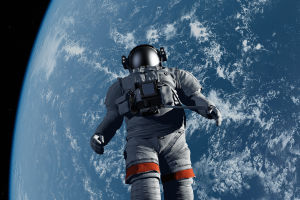
Space is a high-radiation environment that causes "structural failure" in human DNA. Without the Earth's magnetic shield, cosmic rays would degrade a crew's neurological functions within months.
The "SOP" for long-term survival involves creating a mobile fortress. This includes Active Shielding, using electromagnetic coils to deflect charged particles, and Passive Shielding, where the ship's water and fuel reserves are stored in the hull walls to absorb radiation. Furthermore, a "Closed-Loop Life Support System" must be 100% efficient. Every milliliter of moisture must be reclaimed and recycled. The vessel must act as a biological "receptacle," maintaining a stable atmosphere and nutrient cycle without any external input for decades. Gravity is also a mechanical requirement; without it, the skeleton suffers a "density collapse." Rotating the ship to create centrifugal "artificial gravity" is the only proven solution.
The Logistics of the Void
If we were to book a "ticket" to the stars, the economics and logistics would be vastly different from terrestrial travel. We are looking at a multi-generational investment.
• Transportation Cost: Estimates for a laser-sail probe (like Breakthrough Starshot) are approximately $10 billion for the initial infrastructure. A crewed vessel would exceed $1 trillion.
• Travel Duration: At 10% light speed, a trip to Proxima Centauri takes 42 years. For the crew, time would slightly dilate according to the laws of relativity, but for those on Earth, the wait remains nearly half a century.
• Accommodation Spec: A "Generation Ship" would need to be several kilometers long to support a self-sustaining ecosystem. The price for a "berth" would not be in dollars, but in specialized skill sets required to maintain the vessel's hardware.
• Communication Delay: Data sent from the destination takes 4.2 years to reach Earth. Real-time troubleshooting is impossible; the ship must be a fully autonomous "operating system."
The Final Horizon
Interstellar travel is not a question of "if," but a question of "energy scale." We have the theoretical blueprints; we lack the industrial mass. The void is not empty; it is a test of our structural integrity as a species.
Reflect on your own "planetary orbit":
Are you content staying within the safety of the atmosphere, or are you preparing your "internal engine" for the long voyage?
The stars teach us that distance is just a variable to be solved through precision and persistence. We are made of the same elements found in the hearts of distant suns; perhaps returning to them is simply the ultimate "SOP" of the universe. Are you ready to leave the cradle and face the silent dark, or is the gravity of the familiar still too strong? Progress is found in the acceleration toward the unknown.